Hear
The listening unit hears the drone from any direction, day or night, even when nobody can see it.
Drone detection
A low-cost system that hears small drones by the sound of their propellers, works out the direction they're coming from and turns a camera turret to confirm and track them.
Radar is expensive and struggles with small, slow, low targets. RF detectors miss drones flying without a radio link.
Every drone has one thing it cannot hide: the sound of its propellers. We listen for it, and that is all we do. Radar screams into the world, and anyone listening knows where it is. Our system is silent. It sends out no signal, so there is nothing to detect.
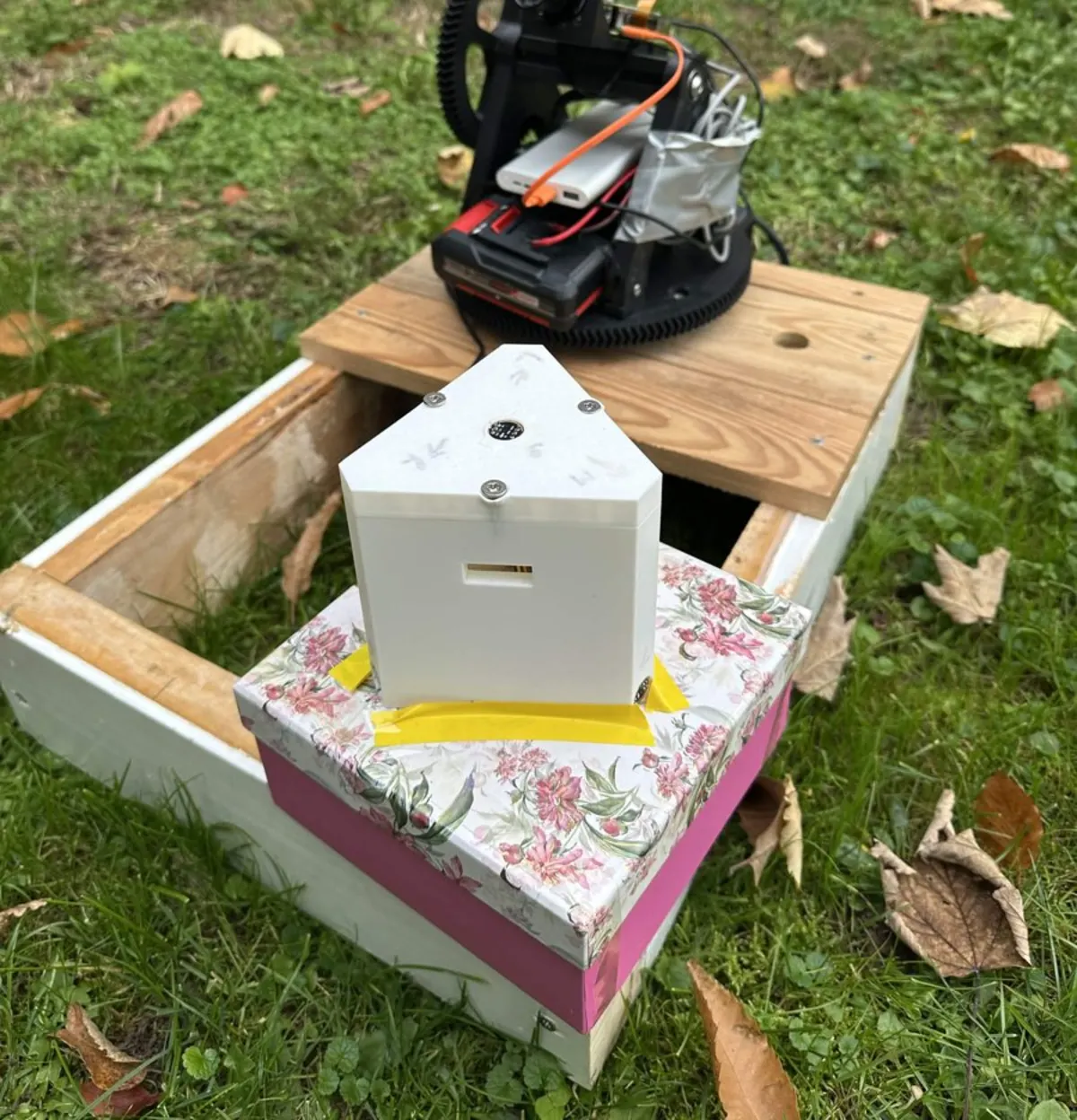 Fig. 02 — Listening unit (front), turret v1 (back)
Twelve small microphones listen at once. A drone's sound reaches each one a few microseconds apart. From those differences we solve for direction, left–right and in height.
A microcontroller samples all twelve in lockstep. An FFT picks out the propeller signature, direction is solved 60 times per second, the track is smoothed while the drone moves, and a rough size estimate goes live to the operator.
Prototype figures · full benchmark in progress
The listening unit hears the drone from any direction, day or night, even when nobody can see it.
The approximate bearing goes to the turret, which swings its camera that way.
An on-board AI model confirms the drone in the image and keeps it centred, on its own.
A countermeasure mounted on turret v2, then cheap interceptor drones.
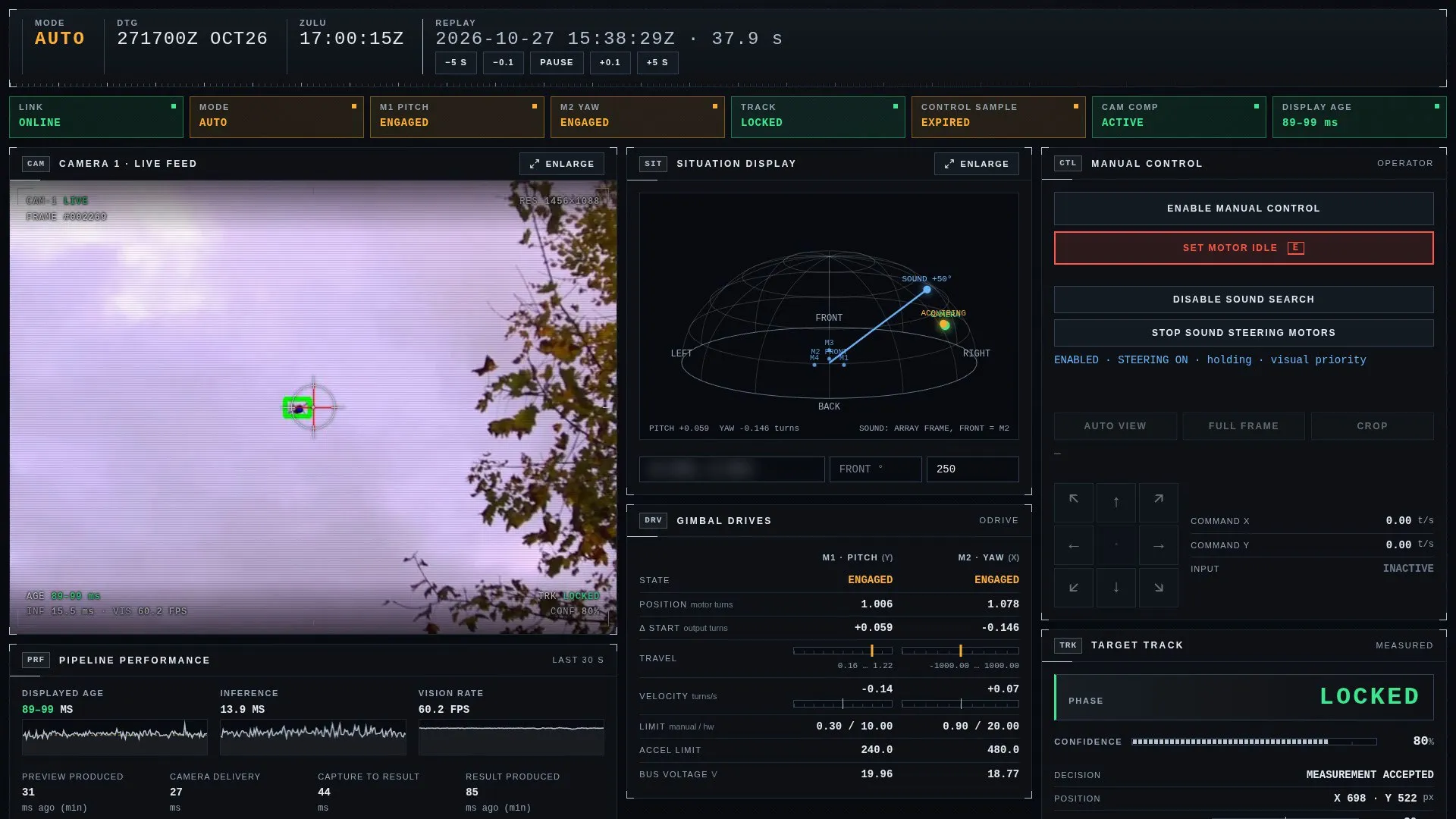
Recorded during an outdoor test: camera with the drone locked, sound direction on the listening hemisphere, motor and tracking state. Everything runs on the turret, with no internet connection.
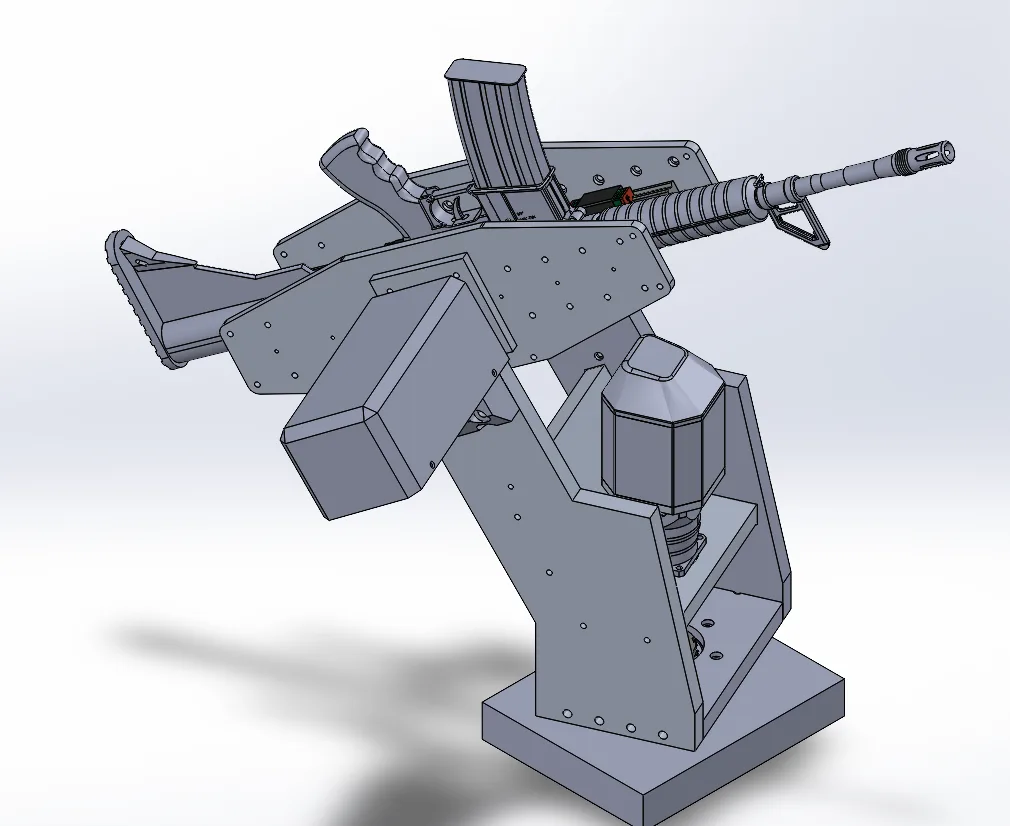
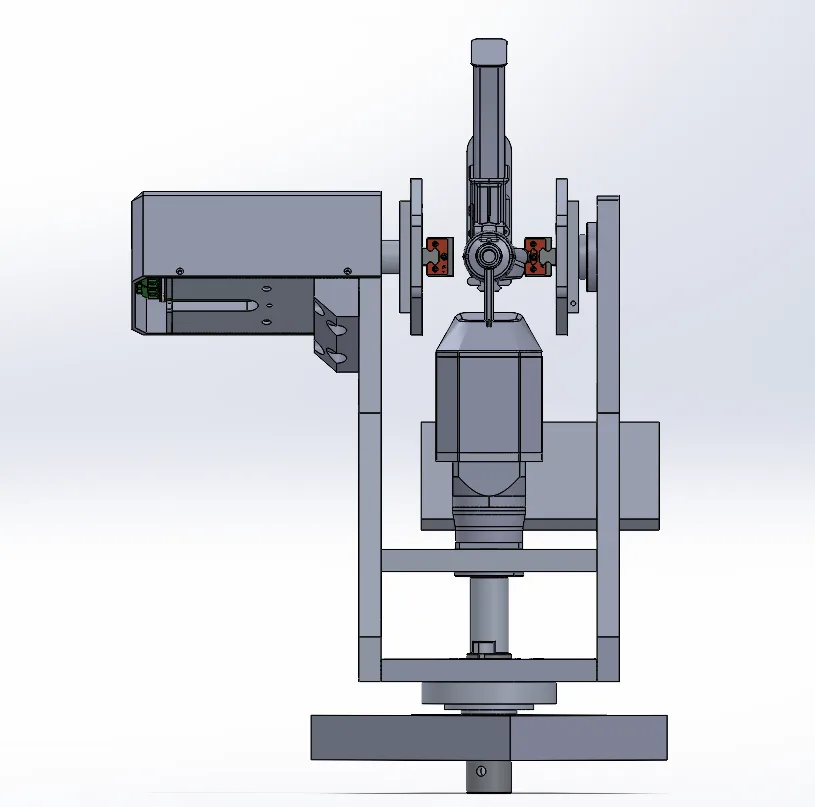
Designed in CAD and now being built: a stiffer frame, our own drive on both axes and a mount for a countermeasure. It is the base for the next phase.
Both working and tested outdoors with real drones.
Stiffer frame with a countermeasure mount.
Listening unit v2, with twice the microphones and a longer range.
Several units together measure distance, not only direction.
The recognition model moves onto the interceptor itself, with no radio link to jam.
Mechanical Eng.
CAD models
Mechanical Eng.
CAD, electrical system, motors
Software
Microphones
Software
Microphones
Own company
CAD, CAM and CNC milling